Monday, June 14, 2010

Dark Parable: Discernment Dream

I dreamed I lived in and/or worked in a large dump/property which also made organic foods. The body parts of a baby was found in a dump. Either ours or the other two nearby.We called the cops and although they were sad about the crime, I didn't think they were passionately interested enough. There was a little blond boy beside me whom I seemed to have kind of adopted and taken it into my head to show him the ropes and enlighten him. A woman or maybe 2 women were also with me. I said to the little boy, "That cop didn't care." Then I corrected myself, "He cared, but he didn't care enough. He should get cadaver dogs. Sure, I know it's hard to find where the dumped baby body parts came from and who dumped it but they could do some investigation, they just either don't have any hope of finding it or they don't want to expend the energy." When I said this I was nibbling on a bit of clean cow foot or cow knuckle. It seemed to be my habit to nibble on that thing. 

These three dumps were different in many ways. For instance, although they were dumps, they also contained large property in which one could do other things. My dump was on one side, then there was one in the middle which was rarely mowed so the grass grew high and one had to be really careful. I warned the little blond boy who was with me that he should wear socks with his boots because mosquitoes would get him. I was thinking snakes but I didn't want to scare him. I told him the difference between the three properties was also that there was a great church on the dump the farthest away from ours. My neighbor's neighbor. The church was called Dawn of the Dead and it was perfect. But it only operated from June to November... during the busy season or the planting season... so we'd have to wait. 

I told the blond little boy that if he was going to work with us he would have to learn to discern certain foods from the smell. I started by saying he had to learn to discern different wines. Then I said, "Wine is very bad." Cause I didn't want him to drink it. But then I realized that wasn't quite true so I corrected myself, "You must've get drunk with wine." And he added, "because it has some good things to it." I was glad I was dealing honestly with this kid because he already knew some truths. 

Then I put other foods under the kids' nose -- blindfolded him-- to see if he could detect what they were so he could sharpen his ability to discern. Chocolate and almond (and maybe sunflower seeds) before they were blended together. Then my friend, Carol, whom I haven't seen in a while blended them together. It seemed to me the little boy would be able to smell them better when they were cut up and blended...because blending releases the aroma and essences. Cause I don't think one can recognize the smell of almonds if they're whole. Not sure. uhm...

Then I put other things under his nose. And finally I brought him a prepackaged candy bar, something with coconut in it. I said to him, "Recognize this smell. It's the smell most commercial prepackaged candy has. After a while you recognize it easily." It seemed to be the smell one smells in bakeshops or maybe high fructose corn syrup or some chemical or whatever. But I wanted him to recognize it and I think I also wanted him to learn to avoid it. 

What is funny is that I was very careful with my words in the dream. That was interesting to me. Choosing what to say and/or carefully correcting myself if I said something wrong. Because that's how I am in real life. For better or worse. 


I think the dream is about prepackaged spirituality, churches with strange smells -- strange flaky modern doctrines-- and one must learn to discern. Discerning of spiritual foods (and doctrines) as well as literal foods, I think. I think we are all "down in the dumps" but we have to know that even then we have organic pure food to give to others. -C

Friday, June 04, 2010

TWO WTF moments in Bible Study:Heavenly Tongs? Really?

 1In the year that king Uzziah died I saw also the LORD sitting upon a throne, high and lifted up, and his train filled the temple.
 2Above it stood the seraphims: each one had six wings; with twain he covered his face, and with twain he covered his feet, and with twain he did fly.
 3And one cried unto another, and said, Holy, holy, holy, is the LORD of hosts: the whole earth is full of his glory.
 4And the posts of the door moved at the voice of him that cried, and the house was filled with smoke.
 5Then said I, Woe is me! for I am undone; because I am a man of unclean lips, and I dwell in the midst of a people of unclean lips: for mine eyes have seen the King, the LORD of hosts.
 6Then flew one of the seraphims unto me, having a live coal in his hand, which he had taken with the tongs from off the altar:
 7And he laid it upon my mouth, and said, Lo, this hath touched thy lips; and thine iniquity is taken away, and thy sin purged.: Isaiah 6: 1-6

So...there are heavenly tongs in heaven? Angels can be hurt by fire from the altar? Tongs?????

The second:
Who is blind but my servant, and deaf like the messenger I send? Who is blind like the one committed to me, blind like the servant of the LORD? Isaiah 42: 19


So...who is the Servant of God blind to? who is the Servant of God deaf to?
The tempting call of seducing religious hypocrites? The siren song of the wealth of the world?
Am thinking.... what was Jesus blind to and deaf to? What should I be blind to and deaf to?

Wednesday, June 02, 2010

Atheists of so many ilks

More and more I'm beginning to see and understand the types of atheists I get along with and the kinds I don't.

To begin with, I'll say that while atheists come in all brands, they do have certain shared commonalities. Some of the commonalities are standardized, that is: they share the same canon of philosophers: Dawkins, Hitchens, and the like. Other commonalities are personality traits...the most basic of which is that they simply have decided that A) those who believe in God are not as deep as they are. (The assumption here is that 1) they have walked in our shoes and managed to remain undeceived about this God silliness or B) if they had walked in our shoes, they would not have succumbed to belief in fairytales, God, and the like. In short, they are way less gullible and far wiser than the rest of the world.)
and
B) those who believe in God are simply not to be believed. (They basically have decided that believers are either liars or deluded. They wouldn't come out and say that but that's pretty much their foundational belief. So they believe that if a believer tells them about anything about prayers being answered or an encounter with the numinous that person is mistaken.)

An atheist's family's religious background also shows up in his life. Not that many will admit this.

A few examples will give you an idea of what I mean. Not making a great generalization but some stuff I've seen: :
An atheist from an orthodox Jewish religious background often loves and values text, law, and learning.  I love Orthodox Jewish atheists. There are also my Jewish atheist friends who are from reformed backgrounds. From my experience, these friends tend to love justice and social causes. .

An atheist who comes from an evangelical background will tend to aim to live a life of accepting everything that they almost go overboard in their "well, I can't judge." I mean...really overboard.

An atheist from a Mennonite background often likes community, and often attempts to bring or create a community of like-minded like-souled people. I love Mennonite atheists.

An atheist from a Roman Catholic background tends to sacramentalize stuff. Certain objects, family rituals, movies, take on a certain spirituality. They also have a keen sense of what is morally right and morally wrong. They make great ethicists, I think.And the ones I know are into women's rights.

The flipside of all this is that an atheist who comes from a particular religious background often carries the prejudices born of that religion as well. When speaking with Catholic atheists, one realizes one is dealing with someone who has a Catholic god. And an Islamic atheist's idea of God will always feel a little too fatalistic for a Christian. And an atheist who comes from a Mormon or evangelical background might still retain certain personality traits. One simply cannot get rid of one's background...no matter how deep and wise one thinks one is.

An atheist who comes from a family with only a nominal American spirituality tends to be the worst kind of atheist because they generally have only the work of pop religion to come up against. These are the type of atheists I tend to dislike. You say "God bless you when they sneeze" and they accuse you of pushing God down their throats. Of course they may have met Christians who were ready to judge and consign them to hell but they'll also have met kind easygoing Christians. Except that their minds will tell them that ALL the Christians they've met are horrible people. They just look to have us fit into the stereotype because they ahve been trained to dislike Christians in general. And they often jump from not believing in Christianity to simply not believing in anything. Being Americans -- and thus filled with American traits-- they tend to be the ones who use American tropes. They also have cultural idiocies such as:

Atheism as victimization -- "It's so scary to "out" myself as an atheist when Christians are ready to cut my throat."

Atheism as a legal right -- "We atheists have our rights too."

Atheism as holy (This is often linked to the victimization trope. Something like: Being a victim is holy, therefore I am a victim, therefore I have never victimized, therefore religion is bad, therefore no religion is good, therefore atheism is the holiest of paths.) This is often extended to

Atheism as holy war: "We must keep the world safe for atheism and protect our children from the encroachment of evil because all religion is evil.)

Atheism as clear thinking and enlightened -- "The Bible is a barbaric book written by barbaric men in barbaric times.") The general idea here is that we moderns are too enlightened to deal with book. After all, we have partial birth abortions where doctors half-deliver babies and jab the baby's neck to kill the baby, we have forced abortion in China, capital punishment in the US. (Inevitably the atheist aligns her idea of enlightenment with her own class and her own culture. So if one shows what non-religious modern gov'ts have done, they say well that was Hitler and Stalin and Mao...not "us" meaning the united states, or people in my own class of enlightened people. So modern enlightened people inevitably ends up being a praise of western civilization and mores....and the atheist's own enlightened friends.)

Atheism as affront. "Could a good God allow evil?" Atheists tend to have the kind of Sunday school mentality wherein a person believes a god God should prevent all evil. At the same time the atheist believes in her own goodness so never really thinks about the fact that if she asks God to destroy evil and if God were to remove man's free will and man's rule over man's own sphere by taking away all man's evil, this would necessarily mean that the atheist herself would have to be removed. Of course atheists don't believe themselves to be perfect but when they think of God allowing evil, they never think about God allowing them to live beside say Hitler.

Atheism as being especially against a Christian Theism. Which I suppose is the point. But the annoying thing here is that the atheist is always saying things are in the Bible which decidedly are not in the Bible. "The Bible says there's original sin." or "The Bible says man cannot be good unless God decides to make man good but at the same time God puts people into hell." or "The Bible is a sexist book.")

Subsets of this are: "If God exists, why should He care about your little problems?"  -- Again, this idea of God as important CEO, probably a response to the idea of a sovereign God.

or "There is no proof for God's existence."    -- Something I always considered silly because I watch way too many criminology shows. The way I see the scene of the "crime" is the universe. And proof depends on evidence we may or may not understand. In the days before fingerprints existed, did anyone know fingerprints mattered? Before the growth of quantum physics, Christians thought "In the beginning God said, 'Light!'" or "In the beginning was Light" was poetic and doctrinal. Now quantum physicists have proven that sound made light and that light made the world. They've even proven that humans are made of sound and light and that there are other dimensions.

This leads to the basic problem with atheists: they are always faithful to old science. They accuse religious people of being backward but more and more we see how stolidly faithful atheists are to concepts and "facts" that have been changed or downright annihilated by newer science. Religion spoke of spiritual realm -- and a spiritual God within-- long before Carl Sagan spoke about the fourth dimension being  "inside" the 3rd dimension.  The Bible spoke about mountains under the sea, the earth being hung upon nothing, and the earth being one land mass long then being divided long before scientists talked about the continental shift etc. And when atheists start telling me the Bible's historical facts are wrong, it is always clear they've read some old higher critics historical document and never read up on later history or a rebuttal. How many people have lost their faith because the higher critics said there was no such thing as the Hittittes, Pontius Pilate, Ur of the Chaldees, David, Solomon! By the time archeology proved that these people -- only mentioned in the Bible-- actually existed, those folks lost who their faiths had already forgotten why they lost their faith. All they knew was the Bible was "wrong." They didn't research to see if what one book or one teacher taught them was true. For instance, if I hear one more person tell me the shroud of Turin was a hoax! Didn't they see the rebuttal and profuse apologies made by the scientists who got it all wrong.  As C S Lewis said, "A young atheist must hold onto his faith with dear life."

Let's -- to avoid an argument-- say that those of us who believe in God are deluded and not as emotionally or intellectually strong as our more enlightened western dwellers. Let's say God is my crutch? Why then should someone who has way more money (their crutch, probably) than I do, someone with no children dead or alive, someone not as often as death's door as I am, someone who probably doesn't know what it was like to actually have no food literally -- well, why should this person want to disabuse me of my crutch? And after they have taken away my crutch, what will this very enlightened person give to those of us who have so much less than they do? Sorry, life is unfair. We're rich or at least middle-class, our children are healthy, we have no dead children, and in short your valiant struggle to live -- whether you were a slave in plantation days or a falsely-accused, falsely-imprisoned prisoner is utterly meaningless to anyone but you? So, yeah, I find pushy atheists to be cold and insensitive and whiny and inconsiderate. (Although it must be stated that for weak folks who need crutches to live -- unlike our enlightened and strong atheist friend who needs no such god-crutch-- there have been religious people from many faiths (especially Christians) who have suffered through some very horrible imprisonments and suffering and maintained their strength and their faith. So, perhaps we religious people are strong in our own way.

The other thing that bothers me about pushy angry atheist is that they all hold to a basic tenet that a religious person who has seen something of God (through a miraculous healing, through a vision, etc) is (of necessity to the atheist's beliefs) lying or deluded. If one has been miraculously healed, if one died and went to hell, if one saw an angel or a demon...and is stupid enough to tell an atheist, one will see this determination to not believe their fellow man. I'm an easygoing person. Not gullible by any means. But if you're my friend and if you tell me you went to the deli, I will believe it. If you tell me you saw the President, I will believe you. If you tell me you saw a ghost, I will believe you. Not so the atheist. The atheist qualifies her friend's statements. This I will believe but in this my dear friend is deluded or is flat-out lying. So, one of the basic tenets of atheism is that they are free to consider their religious friends liars or deluded. Who wants friends who pick and choose what they will believe of what we say?

I don't mind easygoing atheists and agnostics, though. I can proudly say that I have some very good atheist acquaintances. Not really friends, perhaps...because what do we really have in common? At the core of my life is the belief that much in this world will only matter in the light of a Greater Light. So, I connect with my Jewish atheist friends in their love for justice, and my Roman Catholic atheist friends in their love of the sacramental, and my Mennonite friends in their love for beauty, and even with my Islamic atheist friends in a kind of stoical acceptance of certain things in life. But I don't connect with them as much as I do with my religious friends of whatever religion. And definitely not as much as I connect with my religious Christian friends.

Sunday, May 30, 2010

Monday, May 24, 2010

Decisions, decisions: Christianity and Erotic scenes

Okay, so there I am trying to write an erotic novel which my friend is editing for some Scottish publisher. A good opportunity, no? But can I -- a Christian-- write an erotic novel?

Well, I tried. I think I failed to be as raunchy as it could be. It's a Dirty Blues antho, after all. But also, I tend to like eroticism that has little to do with folks being undressed. The scene on the ferris wheel in East of Eden, the umbrella scene in Diva. Longing, sexual need, etc, is right for me. Not the obviousness of naked folks lying together doing acrobatics. Besides I hate writing descriptions of procedures...and dang! erotic scenes are nothing if not procedurals with Tab A being fitted snugly into slot B.

So, anyway, I wrote the story. And of course it's one of those "religion vs sex" situations with a little May December yellow fever thing going on.  Plus my big issue: Christians judging someone and yet not really knowing how to judge that other person's life (yeah, it's one of my big axes.) The thing is that many judgmental Christians are theologically right but within their own hearts is such lack of love for others that the "evil" person they're judging is "more sinned against than sinning." So, my main character chooses to have pre-marital sex with the hot neighbor because she has bad insomnia and incredible fatigue and only sex can help. I hear some judgmental folks saying, "Yeah, right! That doesn't happen!" Oh? Doesn't it?

I'll just say that in a house where extreme tiredness -- physical, spiritual, and emotional-- is the norm...and where sex is used more for medicine than for any kind of fun....I often wonder (if I were to outlive my husband) how I would survive without him being there to use sex to get me to sleep. So I felt for my main character. I also made her a recluse because being sick makes a person a recluse, and being judged by theologically-minded friends who don't understand one's illness also makes one a recluse.

So the thematic issue is no longer: "Is she being sinful by sleeping with this kid she isn't married to?" It now becomes: "Is her friend right to judge her for this?" And also, "Would I rather she A) enter into a quick loveless marriage (so she can sleep) or B) live without sleep forever and die early but still retain her saintly sexless purity?"  There is also the question of: "Is her return to a life connected to humanity a return to love toward her neighbors?" She had been so cold to others in the world because they had been cold to her. So isn't the movement toward loving and caring for one's neighbor a move forward in her Christianity, although the extra-marital sex is a move backward?

I don't want any reader using the circumstances of this story to go into other areas such as is "adultery being okay" or "being gay is okay." The set-up in this story is one I understand and so I was exploring it. The story is not theologically true in any way shape or form....as fiction is not really about theological dogmatic truth (unless it's Christian romantic fiction published by the Christian Booksellers Assn.)

Anyway, I realized I couldn't write the story any other way. If I were holier, I probably could have her decide to endure lifelong pain and forego the hottie and the sex. If I were really holy, I could write something miraculous in which she is healed of the sickness so she wouldn't need to sin in order to get some sleep.  But such as I am...and with my own limited experiences of miracles... what I have written, I have written.

Saturday, May 22, 2010

Guide to literary agents critique contest

Okay, Guide to literary agents is having a critique contest. Every little bit helps, right?

To be eligible to submit: 


Have a completed unpublished adult fantasy or scifi novel
Send the first 150-200 words to the email addy provided. And a one-sentence logline.


Then there's the networking part:
1) Mention and link to this contest twice through your social media—blogs, Twitter, Facebook; or 
2) just mention this contest once and also add Guide to Literary Agents Blog www.guidetoliteraryagents.com/blog to your blogroll. 


Please provide link(s) so the judge can verify eligibility!


Now to figure out a logline for CT


So, yeah, I'm sending Constant Tower's first 200 words.

Knowing Christ Today: Why We Can Trust Spiritual Knowledge


Dallas Willard (HarperOne)


  • Hardcover: 256 pages

  • Publisher: HarperOne; 1 edition (May 26, 2009)

  • Language: English

  • ISBN-10: 0060882441

  • ISBN-13: 978-0060882440


  • Thursday, May 13, 2010

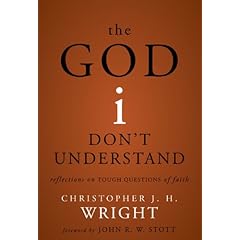
    The God I Don't Understand: Reflections on Tough Questions of Faith Christopher J. H. Wright (Zondervan)


    The God I Don't Understand: Reflections on Tough Questions of Faith 
    Christopher J. H. Wright (Zondervan)


  • Hardcover: 224 pages

  • Publisher: Zondervan (January 1, 2009)

  • Language: English

  • ISBN-10: 0310275466

  • ISBN-13: 978-0310275466

  • Product Dimensions: 9.1 x 


  • Here's the blurb:


    Product Description

    If we are honest, we have to admit that there are many things we don’t understand about God, especially in the face of terrible suffering and evil. Chris Wright offers reflections and encouragement from the Scriptures, so that those who are troubled by these tough questions can still sustain their faith.

    From the Back Cover

    If we are honest, we have to admit that there are many things we don’t understand about God. We do not have final answers to the deep problems of life, and those who say they do are probably living in some degree of delusion. There are areas of mystery in our Christian faith that lie beyond the keenest scholarship or even the most profound spiritual exercises. For many people, these problems raise so many questions and uncertainties that faith itself becomes a struggle, and the very person and character of God are called into question. Chris Wright encourages us to face up to the limitations of our understanding and to acknowledge the pain and grief they can often cause. But at the same time, he wants us to be able to say, like the psalmist in Psalm 73: “But that’s all right. God is ultimately in charge and I can trust him to put things right. Meanwhile, I will stay near to my God, make him my refuge, and go on telling of his deeds.”

    Wednesday, May 12, 2010

    Loic, Psal, Ben...and me


    Yes, yes, it's been years since I updated this blog. Sorry about that. 

    Anyway, been doing some tweaking on Constant Tower. Mostly putting in descriptions and making the dialog sound more contemporary. Really trying to avoid the pseudo high-falutin fantasy yoda-speak. Not quite sure if it's a religious book and that's why I'm having trouble with it (because I'm subconsciously avoiding the religious issue) or if I have yet to discover something essential about that middle section. Will see. Anyway, I got to thinking about the characters and about my isolation issues, pondering the differences between my various characters and how they connect to me. 

    So, for your enjoyment.... as if you have nothing better to do. 


    WIND FOLLOWER
    Loic and Psal had rejection issues. Loic had perceived rejection issues. I don't know where he got the idea that no one loved him. I suppose he was way oversensitive to something. The say some kids are permanently wounded by something done quite unintentionally on the parent's part. That's how I see him. He's sensitive but he keeps it hidden under a personality that keeps its distance from people. He doesn't seek their love at all. And he's arrogant and belligerent. He doesn't allow anyone close to him and he falls in love with Satha because he sees her kind action to a stranger. He says to himself, "She'll be kind to me." So he falls in love with her. The woman he loves is also somewhat outside the world but nevertheless she is honored by the world. It's only her family she has issues with because they think she's too dark. She and Loic have family issues. Loic has no best friends and looks to his descendants to be his family; he wants to form a clan of his own. Loic is ill and believes in the Creator but has a problem with the spirits. Loic has a best friend who died and another best friend who is a developmentally disabled old woman.


    THE CONSTANT TOWER
    Psal on the other hand is truly rejected.  His clan DOES dislike him. His clan does reject him. And the more they reject him the more he seeks their love. Except he can't quite do what they want him to do to actually get that love...which is: he has to be cold to the weak and stop being so dang sensitive and peevish about everything. He can't do this, which makes them avoid him. He falls in love with the first  girl because she falls in love with him. He is willing to marry the second girl because she seems so desperate and she might be pregnant so he can protect her. And he falls in love with Maharai because she is in emotional distress because she has been removed from and misses her own clan and has been placed in a world that is racially different from hers. Just as Psal is racially different from his clan.   (Although racism as such doesn't matter in this story. The races get along, the tribes do not.) Psal wants to just leave his clan and to form a longhouse of his own with two the friends he has. The people of his eime his wife and the other husband of the clan. But he still wants to remain part of the Wheel Clan. (First he just wanted to escape but afterward he decided he still wanted his clan to love him. So he is determined that AFTER his clan is formed and strong, he will be equal to the rest of the Wheel Clan, a chief in his own rights. His longhouse would be a safe home within the clan, a refuge from the cruel world. Psal is ill and does not believe in the spirits. Maharai's brother was murdered and he rmother taken from her, Maharai's mother has adopted an emotionally wounded lost child.


    MY LIFE AS AN ONION
    Ben is not rejected but he's outside the world. He is the perpetual stranger, the perpetual tourist...and he doesn't want it any other way. He has no desire to be part of the larger world. He has friends but they too are outside the world. Like Loic he is rich and healthy, like Psal he has his own little group around him. Except that unlike Loic and Psal, the woman he loves doesn't like his inner sanctum. And like Psal and Loic, he has also fallen in love with a woman who is outside her world. They are different races. But both have their own little group of friends. Her friends are mental and emotional exiles...and poor. His friends are cultural, artistic and emotional exiles. Ben is kind to everyone and perhaps likes everyone, Denise is kind to everyone and distrustful. Neither of them are physically ill but they are emotionally ill. Ben is recovering from the suicide of his brother and Denise takes care of an ill autistic brother and has to deal with the spirits. 

    The women are always poor, the men are often ill, the women are always religious, the women are always dark-skinned. (Husband is quite healthy in real life. And husband isn't Native American or Asian. Husband is white. But after a white minister's white wife told me she didn't want to read of romances where her race was muddied by black people, I figured all my books with Christian interracial couples will have non-white men. Why give them a reason not to read the book. YEAH, I'm still bitter. But I am TRYING to like White Christians, right?) 
      
    All my issues, alas.  Race, health, religion, group mind, rejection, etc. 

    Trying to sort through the various stuff I'll have to speak on in the sessions at coyotecon.com       Already spoke on the non-western viewpoint session. Next sessions are: Christian Speculative Fiction. And Writing while disabled. Then the last will be Race 101

    -C 

    Saturday, May 08, 2010

    Desiring the Kingdom: Worship, Worldview, and Cultural Formation


    Desiring the Kingdom: Worship, Worldview, and Cultural Formation 
    James K. A. Smith (Baker Academic)


  • Paperback: 238 pages


  • Publisher: Baker Academic (August 1, 2009)


  • Language: English


  • ISBN-10: 0801035775


  • ISBN-13: 978-0801035777


  • Here's the blurb:


    Malls, stadiums, and universities are actually liturgical structures that influence and shape our thoughts and affections. Humans--as Augustine noted--are "desiring agents," full of longings and passions; in brief, we are what we love. James K. A. Smith focuses on the themes of liturgy and desire in Desiring the Kingdom, the first book in what will be a three-volume set on the theology of culture. He redirects our yearnings to focus on the greatest good: God. Ultimately, Smith seeks to re-vision education through the process and practice of worship. Students of philosophy, theology, worldview, and culture will welcome Desiring the Kingdom, as will those involved in ministry and other interested readers.

    From the Back Cover

    A Philosophical Theology of CulturePhilosopher James K. A. Smith reshapes the very project of Christian education in Desiring the Kingdom. The first of three volumes that will ultimately provide a comprehensive theology of culture, Desiring the Kingdom focuses education around the themes of liturgy, formation, and desire. Smith's ultimate purpose is to re-vision Christian education as a formative process that redirects our desire toward God's kingdom and its vision of flourishing. In the same way, he re-visions Christian worship as a pedagogical practice that trains our love.
    "James Smith shows in clear, simple, and passionate prose what worship has to do with formation and what both have to do with education. He argues that the God-directed, embodied love that worship gives us is central to all three areas and that those concerned as Christians with teaching and learning need to pay attention, first and last, to the ordering of love. This is an important book and one whose audience should be much broader than the merely scholarly."--Paul J. Griffiths, Duke Divinity School
    "In lucid and lively prose, Jamie Smith reaches back past Calvin to Augustine, crafting a new and insightful Reformed vision for higher education that focuses on the fundamental desires of the human heart rather than on worldviews. Smith deftly describes the 'liturgies' of contemporary life that are played out in churches--but also in shopping malls, sports arenas, and the ad industry--and then re-imagines the Christian university as a place where students learn to properly love the world and not just think about it."--Douglas Jacobsen and Rhonda Hustedt Jacobsen, Messiah College; authors of Scholarship and Christian Faith: Enlarging the Conversation
    "This is a wise, provocative, and inspiring book. It prophetically blurs the boundaries between theory and practice, between theology and other disciplines, between descriptive analysis and constructive imagination. Anyone involved in Christian education should read this book to glimpse a holistic vision of learning and formation. Anyone involved in the worship life of Christian communities should read this book to discover again all that is at stake in the choices we make about our practices."--John D. Witvliet, Calvin Institute of Christian Worship; Calvin College and Calvin Theological Seminary

    Tuesday, April 27, 2010

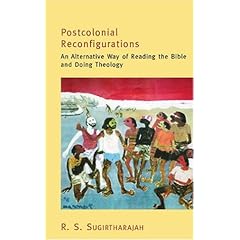
    Postcolonial Reconfigurations: An Alternative Way of Reading the Bible and Doing Theology


    Postcolonial Reconfigurations:: An Alternative Way of Reading the Bible and Doing Theology (Paperback)

    ~ R. S. Sugirtharajah
    • Paperback: 192 pages
    • Publisher: Chalice Press (November 2003)
    • Language: English
    • ISBN-10: 0827229968
    • ISBN-13: 978-0827229969
    The Blurb:
    Collected essays exploring how to do theology (part one) and read the Bible (part two) when viewed through the eyes of oppressed peoples who have suffered - and continue to suffer - from western colonialism.

    About the Author

    R. S. Sugirtharajah is Professor of Biblical Hermeneutics, University of Birmingham. His most recent publications include: Postcolonial Criticism and Biblical Interpretation (2002), and The Bible and the Third World: Precolonial, Colonial and Postcolonial Encounters (2001).


    Monday, April 26, 2010

    White Cat by Holly Black


    Holly Black is the bestselling author of the Spiderwick series. Her first book, Tithe: A Modern Faerie Tale, was an ALA Top Ten Book for Teens, received starred reviews in Publishers Weekly and Kirkus Reviews, and has been translated into twelve languages. Her second teen novel, Valiant, was an ALA Best Book for Young Adults, a Locus Magazine Recommended Read, and a recipient of the Andre Norton Award from the Science Fiction and Fantasy Writers of America. Her third teen novel, Ironside, the sequel to Tithe, was a New York Times bestseller. Her new novel, White Cat, is coming Summer 2010. She lives in Amherst, Massachusetts. Visit Holly at www.blackholly.com.


    Margaret K. McElderry, May 2010
    Hardcover, 320 pages
    ISBN-10: 1416963960
    ISBN-13: 9781416963967
    Ages: 14 and up
    Grades: 9 and up


    Cassel comes from a family of curse workers -- people who have the power to change your emotions, your memories, your luck, by the slightest touch of their hands. And since curse work is illegal, they're all mobsters, or con artists. Except for Cassel. He hasn't got the magic touch, so he's an outsider, the straight kid in a crooked family. You just have to ignore one small detail -- he killed his best friend, Lila, three years ago.
    Ever since, Cassel has carefully built up a façade of normalcy, blending into the crowd. But his façade starts crumbling when he starts sleepwalking, propelled into the night by terrifying dreams about a white cat that wants to tell him something. He's noticing other disturbing things, too, including the strange behavior of his two brothers. They are keeping secrets from him, caught up in a mysterious plot. As Cassel begins to suspect he's part of a huge con game, he also wonders what really happened to Lila. Could she still be alive? To find that out, Cassel will have to out-con the conmen.
    Holly Black has created a gripping tale of mobsters and dark magic where a single touch can bring love -- or death -- and your dreams might be more real than your memories.


    Weekend Movie-Viewing -- The Familyless-ness Edition

    Saw two movies this weekend I really really really loved and one which will probably grow on me. Films that were sad throughout but which ended with joy, healing, communication, and triumph.

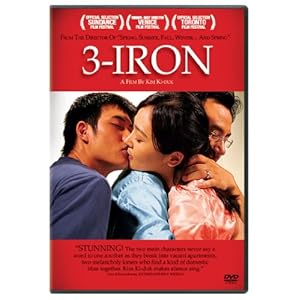
    The first was 3-Iron. A movie in which we hear no dialog from the main characters and yet there's perfect communication going.

    When the story begins, the main male character (who is nameless throughout) is seen entering a house, eating, hanging out, showering. Turns out it's not his house. He lives anchored to any family, any town, any person and survives by breaking into houses and living in them while their inhabitants are out of town. He has a very slick way of determining who is/is not at home.  He picks wealthier houses and one day he enters a house where a battered woman (equally nameless, I think) lives. He goes about doing his usual stuff, not realizing she's watching him, intrigued and somewhat numb from her life.

    After a while, she makes herself known and they silently form a marriage of sorts. (Over two days, I think.) He's a perfect house-husband, cleaning and tidying and tending to her in a gentle caring way. And she is a perfect kind of wife for him. When her husband returns to abuse her even more, they run away together and continue their lives of moving through houses.

    Now, we know the woman's immediate history somewhat. She's a model and her volatile husband thinks that his life of wealth, status, influence, and position is payment enough for abusing her. Yep, he pretty much thinks he owns her. The woman's probably learned silence by having her soul intruded on. Being a model and being looked at as art by some, by something to masturbate on by others. (Heck, you never know!) But never being seen as herself and tired of explaining herself. She also has been silenced. The male hero, on the other hand, doesn't own anything. Nor is he interested in wealth, position, rootedness or influence. Anyways, why is hero this way? Lord knows. He seems sane enough. He's homeless but clean and obviously was someone's good son.

    Okay, maybe not obviously...just my opinion. And everything about this guy is conjecture. Why isn't he anchored to anything? Why doesn't he choose to connect to the world at large? Why does he want to be part of the family --taking photos of himself standing beside the pictures of the houses' owners-- and yet not be part of a family? Why does he not want to influence anything except for the good and in secret? He has all this energy -- a need to golf-- but restrains the energy by restraining the golf ball. (Kinda wish I understood golf so I could get why it's 3-iron and not 7-iron. Is there such a thing as a 7-iron?) Perhaps he has some guilt about his existence or his influence on people...and maybe that's why he's avoiding life. What is he running away from? Why doesn't he want to be seen or known or connect? Yet, he does not steal and repairs the stuff in peoples' houses. But even in this night-elven way of secretly doing good. Either he repairs the stuff in folks' homes as repayment for the night stay or he has a need to do no harm and to influence for good. Gotta say thought that he is not entirely without influence on the lives of others. Because when he allows himself --once that we see-- to do something unrestrained, it leads to harm. And in the first few scenes, we see that his influence for good can also lead to harm he knows nothing about. Basically, one's influence is seen and felt  -- and does harm-- even if one tries to only do good. Life's weird that way.

    Love this movie, loved this movie. Loved the silence.  And why? Because to live in life all we need are food and shelter. To live life happily we also need someone to love us and understand us. But in the modern world it's hard for to be entirely untethered from the rest of humanity. Government and society, etc. Hard to be a hermit. Someone's money has to provide for food and shelter. And yes, the film ends happily!!!! Ta-da! Some stuff you have to accommodate. Love it.

    Other film was My Eleventh Mother.


    Wonderful, perfect, joyful manipulation! I cried four times through My 11th mother. I cried and cried and cried at the end. How perfectly that filmmaker pulled my poor little heart through the ringer. Must get some more tissues. What a great movie.


    Basically, it's a kid surviving amid poverty and flaky parental life film. Not sure why Korea just excels in these films about kids with crappy life but wow! Yeah, I know... I'm gushing. Jae-su is a little kid, maybe ten or so, who lives with his gambler dad. Gambler dad believes a house needs a woman and is always bringing women home to be Jae-su's mom. (These women inevitably leave.) Jae-su's real mom has long since departed. When Gambler dad brings the eleventh Mom into their lowly house, the viewer can see that Jae-su expects the usual. 


    But they become emotionally connected. I"n time, too. Because Jae-su needs a mom (or a memory of a mom) in order to make him live a happy adult life. And eleventh mom needs to love and to be loved before she -- yeah, it's a Korean film so you know what's coming...no spoiler here-- dies. 


    I'm a wuss. Any movie about poverty, any movie about suffering kids...and well, it's pretty much a given that I'll like it. So.....I looved this movie.


    The third film is Calla. It doesn't exactly fit into the familyless-ness theme but I watched it so... I'll include it. It's a travel-back-in-time to get matters right thriller romance. Well, actually it's a romance with pretensions of thrillerhood. 


    Guy (played by way, way, way hot Song Seung-Heon) sees a beautiful woman on a bus and is kinda attracted to her. They kinda pass each other here and there and then he starts getting flowers, a calla lily, on his desk each morning. The girl works in a flower shop. Now, as I've said more times than I care to remember, folks in love in Korea seem to be inordinately shy. (Not like yours truly who is more of a recluse and extremely wounded inept social type with rejection issues...no this is shyness of that peculiarly Korean character.  The kind of shyness on which thrillers like this turn.)


    Upshot? The girl he's been trying to get the nerve up to declare his love to...is murdered. He's devastated. But I must add that there is hope. After all, a tear, a wish, and a locket can work time-travel magic if you wish hard enough. And so he finds himself tossed back in time with the one purpose any true lover can have: he must save his unknown beloved. 


    I'll say that if it weren't for the hotness of the lead character, I would've lost all patience with this flick. It ends well and has a neat twist so sitting through the suspension of disbelief was worth it. Ah, suspension of disbelief, what a lovely lovely lovely thing you are! Good for we religious types when the road gets rocky -- the power to consciously put doubt and fear aside-- and great for we movie-lover types who suddenly have to deal with a very quiet non-macho guy suddenly getting all Rambo on some drug dealer's butt. 


    The funny thing is I was supposed to be fasting and praying this weekend. For the health, money, creativity, rejection, and untetheredness issues. I fasted but didn't pray. (Except at nighttime) Just was totally into movies. And yet, God was with me in these films. Kinda like when one repeats the lines of a favorite poem. The act of meditating on the poem is very like prayer. So there I was in the middle of Calla --fawning over extremely hot lead actor-- and up comes a godwink. I'd been working on a section in Life as an Onion when I had one character say: "It's all a matter of timing." And there in the comments section of the Calla site on AZNV is someone saying, "It's all a matter of timing." I smiled. Felt very loved. God with us even in our silly secularities. So... all the movies I watched turned out to be there to heal my soul.


    All in all, a wonderful weekend of film-viewing.

    My cinematic Brother James  who wrote a review on 3-Iron on amazon clued me into this site. http://aznv.tv/?p=home
    Free Asian movies. You have to register and download winamp the first time and then you're good to go.

    Monday, April 12, 2010

    Christianity in China


    Weekend Movie-Viewing -- the unusual influences in teenagers' lives edition

    Okay, so teenage life is hard enough. Either run-of-the-mill and lacks impetus or meaning, or some intrusion outside the norm happens. Whether it's falling in love with an older woman or battling a demon because of love, it is love that gives life meaning. And what is a teenager to do with these unexpected events except to go with it? If he is looking for passion and meaning, he'll go for it. If he isn't looking for passion, that hardly matters, a gentler kind of passion will find him.

    Don't Laugh at My romance


    Negative Happy Chainsaw Edge

    Thursday, April 08, 2010

    Flow Through Me, Holy Spirit (Navajo Lyrics)

    Dark Parable: waking and waking and waking

    I dreamed I was sleeping and there were East Indian demons trying to get at me. I struggled to get out of the dream and thought I woke up. But I woke inside another dream. Tried to get out of that one and realized there were layers of dreams and had to get out and be truly awake. Then the Lord showed me His light shining through and that where His light was the dreaming would stop. I realized that if I thought and spoke God's word about light that God's light would push the false dreaming that the east indian gods had put on me.

    I realized that I should pray that God's light would pierce the darkness and to speak verses about God's light so my brain and my family's brain wouldn't be affected by the demons and so we could dream the dreams God wanted to give us.

    I didn't know if it was something in my house that had opened the house to east indian gods. This is the third dream I've had about east indians and Christianity.

    I woke up and fell asleep and dreamed again. This time I was cooking in an oven and messed up the oven so that it could only give me two channels. It wasn't my oven so I told the man I'd pay for the damage. There was also something about a school trip/experiment. When I woke up, I said to my husband, "How is like an oven like a TV set with channels?"

    Then I realized the dream was talking about what we digest. God's been really hammering away at me about not returning to watching TV because a lie of some kind will soon be on TV -- whether church channels or the world-- and it would fool even the very elect.

    We have to keep in the light so we don't fall asleep and think we're awake. Am also wondering if there's anything in the house I should get rid of.

    Possible interpretation:
    To me East Indians and Hinduism represents syncretism. There is something good about wholeness and holistic stuff... and yet I don't know...maybe that's what God is talking about ...that we have to be so careful about that wrong kind of syncretism. Interesting how the gospel of Thomas and the Indian type of Christianity has that weird gnostic thing. And the weird kundalini anointings that have been popping up in churches. Very Todd Bentleyesque. Whatever it is, I'm being very careful. I used to think that I have such discernment I wouldn't be deceived. But Jesus said, "if it were possible the deception would fool even the very elect." Not sure if I'm elect or not, although I'm sure I'm going to heaven (at this point in my life, anyway) and I DO NOT wish to risk being deceived. You can't really prepare yourself not to be deceived. We have to pray that God's light and word awaken us. So many times we think we're awake. We say, "okay, I'm saved now." Then we learn a little more and say, "okay, I'm saved now." Then we (learn) wake a little more and say, "okay, I'm not as asleep as I once was." But more and more I'm seeing the depths of my own darkness and the church's darkness and how easily one can think one is awake when one is really asleep. So am definitely being very careful and discerning in what the TV -- secular or christian-- sends my way. Watching what gets put into my oven.

    -C

    Wednesday, April 07, 2010

    S. E. Cupp warns that we are LOSING OUR RELIGION


    LOSING OUR RELIGION
    S. E. Cupp


  • Hardcover: 288 pages

  • Publisher: Threshold Editions (April 27, 2010)

  • Language: English

  • ISBN-10: 1439173168

  • ISBN-13: 978-1439173169


  • Here's the blurb:
    "The press has become a tool of oppression—politicized, self–aware, self–motivated, and power–hungry. . . . In short, these people can no longer be trusted." —From S. E. Cupp’s Losing Our Religion


    It’s time to wake up and smell the bias. The go-to commentator for such programs as Fox News’s Hannity and CNN’s Larry King Live and Reliable Sources, S. E. Cupp is just that—a reliable source for the latest news, trends, and forecasts in young, bright, conservative America. Savvy and outspoken when shattering left-leaning assumptions as she did in Why You’re Wrong About the Right, Cupp now takes on the most pressing threat to the values and beliefs held and practiced by the majority of Americans: the marginalizing of Christianity by the flagrantly biased liberal media.

    From her galvanizing introduction, you know where S. E. Cupp stands: She’s an atheist. A non-believer. Which makes her the perfect impartial reporter from the trenches of a culture war dividing America and eroding the Judeo-Christian values on which this country was founded. Starting at the top, she exposes the unwitting courtship of President Obama and the liberal press, which consistently misreports or downplays Obama’s clear discomfort with, or blatant disregard for, religious America—from covering up religious imagery in the backdrop of his Georgetown University speech to his absence from events surrounding the National Day of Prayer, to identifying America in his inaugural address as, among other things, "a nation of non-believers." She likens the calculated attacks of the liberal media to a class war, a revolution with a singular purpose: to overthrow God and silence Christian America for good. And she sends out an urgent call for all Americans to push back the leftist propaganda blitz striking on the Internet, radio, television, in films, publishing, and print journalism—or invite the tyrannies of a "mainstream" media set on mocking our beliefs, controlling our decisions, and extinguishing our freedoms.

    Now, discover the truth behind the war against Christmas—and how political correctness keeps the faithful under wraps . . . the one-sided analyses of Prop 8 and the gay marriage debate . . . the media pot-shots at Sarah Palin’s personal faith . . . the politicization of entertainment mainstays such as American Idol and the Miss USA Pageant . . . and much more. Also included are her penetrating interviews with Dinesh D’Souza, Martha Zoller, James T. Harris, Newt Gingrich, Kevin Madden, and Kevin Williamson of National Review, delivering must-read analyses of the latest stunning lowlights from the liberal media.

    About the Author
    S.E. CUPP is a regular guest commentator on MSNBC, CNN, C-SPAN, and Fox News Channel programs including Hannity, Larry King Live, The Joy Behar Show, Red Eye with Greg Gutfeld, Geraldo and Reliable Sources. A nationally published political columnist and culture critic, she is currently an online columnist for the New York Daily News and senior writer at The Daily Caller. She coauthored Why You're Wrong About the Right with Brett Joshpe. Visit www.redsecupp.com

    Tuesday, April 06, 2010

    Discovering more about Onion

    My post on false notes appears at blogging in black today. If you read that...you'll see what's going on.

    Here's the post:
    While working on my YA, I almost added a personality trait to a secondary character which would’ve taken the novel down a different route and – in the composition of the novel-- added a false note.

    False notes happen when a certain event, character trait, or scene in a novel simply jangles with the rest of the novel. A writer can often get over with false notes and still write a viable novel but it will not be the novel her soul set out to write.

    But in my experience, false notes happen when the writer has lost track of what her story was originally about, or simply never understood the theme of her story in the first place.

    The first thing one must remember in writing is that the author very often doesn’t know what the narrator is writing about. Plain and simply, this means we really don’t know what a story is about. Those who set out to write a formulaic story, or a preachy Christian story, or worked from an outline at the beginning of a story, are aware of what they are writing. But if one has simply sat down at a computer and allowed the first draft of a story to spill out, one doesn’t know what one’s soul is talking about. It’s been said that a writer discovers a story in the first draft. But often it takes three or four drafts – plus a long conversation with an astute writing friend—to finally see what has been before us all the time.


    Many writers can get away with false notes, because
    a) their readers have been trained to think of certain stories in a certain way
    b) their readers just don’t read that deeply
    c) the writer has written the false note so compellingly that the original intent of the novel gets lost.
    d) The writer herself does not want to acknowledge her own inner conflicts that have brought about the story.
    e) The writer is a deep thinker but is too fearful, lazy, or tired to actually write the story the muse has given her.

    So if a reader or writer has been trained to believe that love stories happen in a particular way, anything the author’s subconscious muse might be saying to the contrary will not be seen by either the reader or the writer. The writer will create the false note and the reader will accept it as the story’s truth.

    The false notes feels off-key to a true lover of stories. It jangles. We have all been to movies where we find ourselves saying to our movie-going buddy, “What the heck just happened?” And either the movie-going buddy agrees with us or totally disagrees. I remember watching a film made by a feminist woman filmmaker. It was a history of her family and in the voice-over, the narratore kept saying how ignorant and unenlightened her father was but dang! Every scene with the mother was cold and loveless. The filmmaker didn’t seem to realize that despite all her mockery of the male figure, she was showing us his sweetness. At the end, when the credits rolled there was a total disconnect. Even the youngest kid would’ve told her that the ending just didn’t jive. Probably the only person who could’ve watched the film and not seen the false note would be another feminist.

    False notes tend to happy in films that are meant to have happy endings or which are meant to be polemic. So often I’ve raised my eyebrows at the end of a thirties heist film when the bad guy dies and the voiceover says that bad people are thugs and not heroes! Yet, the entire film was about how brave and cocky these gangsters were.

    So when do false notes creep in? A false note will creep in around the third draft when the author begins to think that certain traits should be added to certain characters. In my case, my character had two rivals for her affection. Both were good boys with interesting traits, but I wanted her with my main male character who was being quite unpleasant. I therefore had to find a way to make the other guy unpleasant. I figured I’d make him a racist. But this “evil sin dropped into a book in the middle of nowhere” just didn’t jive with my beta reader who had astutely seen what my narrator was talking about. In short, it didn’t matter how bad or how unpleasant my main male character was, my main female character was gonna love him no matter what. It was going to be a painful road for her, the readers would want to give her a good shake or throw the book down – but they were not going to be given the loophole of a false note. Essentially, the narrator of the story was writing a composition about devastating, sacrificial love for a possibly not-to-good person and I the author had not seen that my story was basically an unhappy tragic love story with a somewhat perverse ending.

    The best way to avoid false notes is to ask a good beta reader what the story is saying to them. Tell them to be brave and to tell you what they dislike or like about the main characters. Tell them not to think about marketability. All you need to know is what the narrator is telling you in this story. Is the narrator happy about the situation, bitter, hurt? After you’ve been told the gist of your story, then you the author will discover and know what the narrator and true composer already knows.

    Anyways, the more and more I work on Onion the more I discover about it. First I realized it's A) about her addiction to him as well as his addiction to drugs. Sure she's his sober companion but her love and attitude toward him isn't particularly sober or sane. B) It's about sexual orientation and what makes us fall in love with certain people and C) it's about the worship of external beauty that occurs in the main character's life because her harsh upbringing combined with her growing up watching way too much TV infused her with a Cinderella complex.

    I've made Ben a real person because I hate stories where the gorgeous guy turns out to be a jerk. I wanted Denise to have her Cinderella dream but I also wanted to examine it.

    So on the one hand it's a very Christian book because it explores the world, the flesh, and the devil --- how the media makes us worship beauty. But on the other hand, it's not exactly Christian because I really want to go deeply into this...and I don't think the Christian publishing world would want me to write about this -- especially when I talk about sexual shame. So.....

    Sunday, April 04, 2010

    Dark Parable: Birds that peck out the eye

    I dreamed I was walking on a path around early dusk. In the dream I remembered
    it from another dream and I remembered the warning that went with it. There was
    a gate from the field I was on which led to another field. I knew that very
    cruel birds watched that gate and whenever people stopped to open the gate to go
    from one field to the other the birds would take that small momentary
    opportunity while people waited to take out the eyes of the person.

    There was a way around to the other field. But I had gone there before in
    another dream and had managed to escape the birds so I figured I'd go this way
    again. Besides there was a shadowy figure looming just beyond the gate, pretty
    much beside it, and I thought it was my friend. So I figured: "why go the long
    way round? Take a chance."

    I saw a flock of these creepy birds -- black-- hovering but only one came down
    when he saw me approach the gate. He perched on a rock and waited.

    I was wearing a scarf/shawl and it was bundled on my head kind of messily, kinda
    hanging over my eyes and bunched up at the back. So I figured that would protect
    me. I also put my left hand over my cheek near my left eye so the eye would be
    covered.

    I saw that the latch to the gate was closed and that I had to fiddle with it. So
    I tried to open it with my eyes closed and with my hand over my eyes. The bird
    started pulling at my scarf near my eye to yank it off. I could also feel him
    yanking away at the scarf near my neck. I kept fiddling with the latch...and I
    thought the gate was opened. I'm not sure, though. I remembering wondering why
    my friend wasn't helping me now that I was past the gate. Then I started
    wondering if it was my friend at all. Because the person was so shrouded and
    covered in dark clothing.

    INTERPRETATION:

    I realized that the way I was covering my eyes in the dream...to open the latch to the unknown shadowed friend and yet to protect the eyes... is exactly how I read some emails from internet friends. Friends beyond the eye-gate (the monitor). You never know when you're going to get a nasty email from some touchy new cyber-friend. I think God was telling me to be careful. One can't spend one's time befriending folks and then being afraid of their oversensitive letters.

    Blog Archive

    Popular Posts