Monday, November 02, 2020

The Fan: Control, Disorientation, and the Genre of Regret


As an eleven-year-old kid sitting in front of the TV watching PBS’ weekly Janus film festival, I was deeply affected by two movies. The first was The Heiress with Olivia De Haviland (which has nothing to do with this review) and the other was Rashomon, the great Japanese movie that explores experience, perspective, and self-serving humanity’s inability to see truth clearly. The repetition of scenes with large or slight changes in narrative was a perfect visual representation of theme and variations, and the fact that the story ended without giving the viewer a clear final truth was sheer perfection. So, as a kid I had discovered the great truth of “he said/she said.” This is a great truth to know.

I also was a lover of puzzles, read a lot of Edgar Allen Poe, and an avid studier of Bible prophecies. Thus I was primed to become a lover of time travel movies and films about psychological confusion and the giddy carnival that are part of movies about disorientation.

Disorientation movies often fall into three categories: Self-observance, the splintering of the self, and the Dante-esque idea of suddenly finding that one is suddenly lost in the woods.

Time paradox movies follow this pattern also, but there is that additional aura of regret and cachet of quantum physics and multiverses.  Thus we have stories where main characters are mired in returning to the Road not taken, characters who worry about the moment when their lives went askew, and the human passion for puzzles.

Movies such as Enemy, Inception, and The One I Love fall into these categories. Recently, I got so caught up in studying time-travel that, like a chocolate addict who finds herself in Hershey Pennsylvania, I had to throw off all fears of wasting time and calories and delve into the substance I love abusing: time.

The more stories I see about time, the happy I am at how time paradoxes are emerging as a genre. And when those stories are filmed – as opposed to books—the riches of the genre become even more magnified. With the camera’s ability to focus, misdirect, and hide, we can end up with stories that confuse while simultaneously clueing us in to the themes, games, and characters. For instance, 11 Minutes Ago and Coherence are both indie films with characters who attempt to understand time travel. But whereas the sophisticated characters in Coherence are terrified at the prospect of time being out of joint and get utterly bent out of shape in their desire to control the singularity, the characters in 11 Minutes Ago are pretty chill with a main character who is attempting to sort out the secrets of time with the help of bystanders who discover his secret. The folks in Coherence, on the other hand, are fueled by fear. And fear of what? Themselves. Because examination of the self is often one of the aspects of multiple worlds. What kind of person would we be if we were in another world or if we had walked another path. So time travel is quite often futuristic, psychological, historical, spiritually existential, thriller, and puzzler all in one. Hence, my love of it.


Having glutted myself on time-loops, time paradoxes, and singularity I can assure you, Dear Reader, that I will not be overwhelming you with yet another article on time-travel movies. At least not anytime soon. Books await me and time must be put aside for the time being so I can use my time in a timely manner for better things.

So here goes:


11 a.m. South Korea 2013 CJ entertainment. Written by Lee Seung-hwan. Directed by Kim Hyun-Seok.


After dwindling down the choices from the many time travel flicks I’ve seen this month, the remaining contenders were Time Lapse and 11 a.m. So, the first: 11 a.m. because I like Korean (and non-US) speculative fiction.


The story is pretty basic. Our hero Woo-seok is leading a time travel research project called Trotsky -- so named because it concerns the past and alternate timelines and because Trotsky would’ve been the great Soviet leader instead of Stalin had if time had turned out differently. I need not tell you that Team Leader  Woo-seok has a past he wants to change, do I? We pretty much know that all Mad Scientists have some horrible event that happened in the past from which their passion came. So, yes, this passion for time travel originated in the death of our hero’s beloved wife. Ah, if he could only go back in time and fix things.


But her death happened waaaaaaaay back when. And so far the Trotsky team have only been able to (theoretically) go back in time for 24 hours. Not a bad start! But apparently not good enough for the Russians who have been backing this project and who now are on the verge of shutting it down.


Disappointed but valiant --and (as I’ve already stated) led by a somewhat obsessed Team Leader, our scientists decide to try to send Trotsky into the future. “For real, this time.” No more theories or transporting non-humans into the future. Woo-seok and Young-eun are sent a day ahead. At exactly 11: a.m. But when they arrive there, they find much amiss. The station’s ablaze, some crazy guy is attempting to murder Woo-seok folks have died, the CCTV tapes are scrambled and the walls are crumbling.  Dear me! What do these things mean? How did matters come to this pass? Have the Russians been doing shady things? Or has knowing the future caused this bad future to happen?


This is a fun flick. It’s fast-paced and it comes together well. I didn’t find any plot holes -- which is what one looks for in time travel flicks-- but it’s possible I was so caught up in the story I missed them. This film is streaming on the web.  


Time Lapse 104 minutes  USA 2014  Written by Bradley D King and BP Cooper. Veritas Production


Time Lapse is not exactly a time travel pic. It’s more of a fortune-telling advanced information pic. And it turns out to be the perfect complement to our Korean time travel piece, 11 a.m. We have three best buds -- consisting of Callie, Finn, and Jasper. Finn and Callie are dating and Jasper is well, hovering around them as best friends who are in love with their friend’s girl often do.


A neighbor goes missing. In their search for him, they discover a camera that takes pictures of coming events. Exactly 24 hours in the future. Dear me! What a difference a day makes! Well, for one, it can make a difference between winning a lot of money on gambling and winning a little. It can prevent -- or cause?-- murders. And if one or two of the main characters are obsessed with greed or lust or passion, well, who knows what will happen?


The funny thing about the course of events is that yet again knowing the future creates the future. In 11 a.m., the characters try to fight against what seems inevitable. In Time Lapse, the hipster ever-so-sure-of-themselves friends believe that since a future scene appears in a photograph, they are obligated to recreate what they see in the picture. But like the scrambled CCTV tapes in 11 a.m., these folks are working with incomplete information. I definitely recommend this movie. This film is available on DVD and is streaming online and on Netflix.  


The Beauty Inside 2015 South Korea. Yang Film. Directed by Baek Jong-yeol


Our third entry of involves not time, not space, but the human body and it has the feel of a transgressive fairy tale. Or perhaps it would be more transgressive if it hadn’t played it so safe. I will say though that some folks --especially those who are uncomfortable with non-normative sexual relationships-- might not find it such a safe watch. (This film is based on the original Intel and Toshiba “social” film, which I have not seen so alas, no way for me to compare.)


On his eighteenth birthday, Woo-Jin discovers that he is a monster. He wakes to find that he is not himself. Not externally anyway. He soon realizes that it is his fate to look differently every day. He wakes not knowing what sex, race, or age he will be. The only way he can keep any one face is to not go to sleep. But sooner or later sleep overtakes him and he awakes to a new self. One can imagine that this could be a problem. He lives an isolated life as a furniture maker with only his mother and his best friend privy to his secret.


Then one day he falls in love.  At first he is content to simply visit Yi Soo, the object of his affection every day. Since he looks like a different person, he can just pretend to be a customer. But after a while, he decides to show her who he is. After the initial shock -- and worry that she is dealing with a nutcase--  Yi Soo accepts him. But this acceptance takes a toll on her mental health and on her reputation. After all, her co-workers think of her as a man who sees a different man every day. And the poor girl only knows who her boyfriend is when he takes her hand in the morning or when he emails a photo of himself in the morning.  We come to understand that although human love is based on the beauty inside, there is comfort in the routine of seeing the same person’s face every day.


So then, the safety and discomfort factor. True, there are scenes where we see two girls lying in a bed caressing each other’s faces but that’s pretty much it. Not that I wanted a full-on gay sex scene but if the filmmakers are going to challenge society, they really should step up and make some of us conservative folks in the audience cringe or cover our eyes. But perhaps some conservative folks in Korea had that reaction. It would’ve been neat too to have an interracial kiss on one of the days when our hero is a Black person. Heck, I wouldn’t have minded a scene showing him as a Black person walking around town.  But the biggest problem in this incredibly sweet and wonderful angsty movie is how incredibly sweet and wonderful and angsty it is. And you know what that means, don’t you? While there are the occasional ugly, old, plain, middle-aged folks thrown in as our main lead, the guys who play our heroes are all incredibly hot and gorgeous. Korea’s culture of beauty obsession is not challenged at all. So, how can one dislike a movie when all of one’s favorite Korean stars are in it? Highly recommended. I suppose the film does say something about love and appearances. I just don’t know what. But it is beautiful and touching to watch.  This film is showing in art theaters.


ROWS  Runtime: 82 minutes


The opening shot of Rows, is a row of modern houses. Heroine’s dad is a real estate developer who wants to destroy the creaky old house on the property. Trouble is, an oldish woman named Haviland lives there and she won’t leave. Dad wants heroine to give Haviland the writ of eviction. Because he has decided he must be freed from her irrational fears of the house’s inhabitant.


Before we go any further, let’s pause a moment to ponder the heroine’s name. It’s Rose. Yep. And in addition to the rows of houses, there are rows of ominous corn fields. Unlike Coherence, which gives the viewer some clues before it sends us into the plurality and which tells us early in the plot that we are dealing with some wrinkle in time and place, the viewer of ROWS is floundering like its heroine. We wonder what the heck is going on throughout all the rows and rows of repetitions. 

Is this some intuition or some spell caused by the aged woman who might be a long-lived witch? Is our heroine having flash-backs or premonitions? When did heroine’s “time of trouble” begin?  


Was all that time-looping representative of Rose’s memory? Premonition of future events? Is it the result of breathing in too much pesticides and chemicals? Why is our heroine on a bed? Is she mentally-ill? Was there something in the cookies the woman gave her? Is this movie for or against our desire to be rational? Is it against living by intuition? Are dealing with a maze of mind? A maze of time? Or badly-done film-making manipulation? Some films do confusion well, and some not so well. Sure, there are nods to Hansel and Gretel and even a wink to Dante, but I don’t understand this film. I won’t go so far to say the filmmakers did a crappy job in clueing the viewer in because they might have wanted to leave us clueless. But I felt seriously lost in the corn.


Signal  2015 Streaming online at Dramafever and will probably end up on Hulu or Netflix.


Signal is a Korean drama I’m currently watching about a profiler cold case cop in the present who teams up with a cop in the past to solve past crimes. Easy enough one would think, right? But no! Turns out, messing with past time can cause havoc in the present. Do you really want to arrest the cold case guy back in the past? And what happens if you arrest the wrong guy in the past and he gets out of jail in the present and goes after the people who gave him grief in the past—leading to modern deaths? How does one undo all one’s undoing? I will add that the detective in the past whom the modern profiler cop’s talking to has died, and there is a chance we could save him…ya know..if we go back far enough in time. I will just say that this is one seriously fun drama and you definitely should catch it.


Til next time: happy times!

Saturday, August 31, 2019

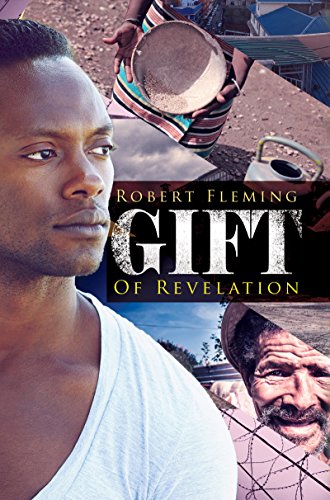
Review: Gift of Revelation by Robert Fleming


Here's the blurb:

In this third installment of the Gift series, Reverend Clint and Addie
are finally settling down in Harlem following their Alabama adventure, during which they help black farmers. Addie, a former schoolteacher, loves New York City, with its glittering tourist sites. When she meets Dr. Bentley Gomes, a missionary just back from Africa, she is alarmed to learn of the worsening human rights crisis in Sudan. Addie is intrigued by the need for volunteers to aid those caught in the bloody war in this region. Meanwhile, Reverend Clint encounters African refugees, and their stories of suffering and pain tug at his soul.

Before Reverend Clint realizes what is going on, Addie volunteers to go to Sudan. The pastor follows her on this unforgettable journey of discovery and revelation, into the dangerous region, where they confront famine, violence, and religious persecution. As Addie plunges into this hell, she wants Reverend Clint to make a lasting commitment to her. She wants something solid but wonders if they'll make it out alive. Will the Sudan adventure transform their admiration for each other into fully realized love? Or will Sudan, with its violent extremists, corrupt politicians, heroic doctors, and long-suffering refugees, derail them from intimacy and trust?


  • File Size: 1115 KB
  • Print Length: 288 pages
  • Publisher: Urban Christian (March 1, 2015)
  • Publication Date: February 24, 2015


  • My Review:


    Christian Books that are written by Black American Christians often deal with subjects that white Christian Americans rarely touch upon.  In addition, many Christian books written about country folk often depict rural America as a kind of pure Eden. In Gift of Hope, Robert Fleming shone his passionate and honest spotlight on racism in southern Christian America. Now the third installment of his series is more concerned with more global issues and often with Africa, the Black diaspora, racial and clan wars, and with inter-tribal, inter-clan African warfare.

    The book is informative, well-researched and searingly honest. Which is a good and a bad thing. Mr Fleming, a well-known journalist and author, wants to put so much of his heart and passions into the novel that the book often comes off like a thinly-veiled journalistic article.  His skills at writing horror are well used here as he writes about the horrors of war in Africa. 

    The main character, Reverend Clint, is a sympathetic character in the way most Christian fiction protagonists are sympathetic. And while the writer does lay it on thick that the main character has suffered, Reverend Clint is shown to be such a holy sufferer that he almost feels like a symbol instead of like a living breathing person. The same can be said for Addie, his love interest, who seems like a manic pixie dream girl wish fulfillment character. I know the character is still recovering from his wife's suicide and her murder of their children but I don't feel the suffering or the recovery. We are told repeatedly that his experience with his now-deceased crazy wife has damaged him, but we rarely see him missing or grieving for his kids. It makes me feel as if the writer didn't mine the personal aspects of the situation portrayed in the story. I found myself wondering if the story would have felt more real to me if the writer had simply made the wife kill herself and not the kids as well. 

    The main thrust of the novel feels less personal and intimate. For the first parts of the novel, the main characters are hearing a lot about Sudan and the hearts of the main characters seem somehow distanced from the reader even though the author keeps telling us about their hearts. Fleming's depiction of the violence and the disturbing images the protagonist sees feels realistic, but the depiction of the hero's suffering feels unrealistic here in the third installment as it did in the first two books of the series. There are moments when characters will suddenly start discussing religion, race, religious wars, and journalism that feel wedged in. I've read several of his novels and he truly is a good writer but his transition to Christian novel writing is still ongoing.

    Christian fiction is stagnant in many ways and Fleming is taking it into new territories. Having read his excellent serial killer novel, Havoc After Dark,and knowing the skill of his horror collection Evil Never Sleeps I would like to see him tackle a Christian urban horror novel. Fleming has changed Christian fiction by giving us realistic books about racism and war and I believe he is that author who is able to merge his horror talents with Christian fiction.

    Three out of five stars. Recommended for church groups that may want to discuss African warfare.

    Robert Fleming Bio:

    Biography

    Robert Fleming, a freelance journalist and reviewer, formerly worked as an award-winning reporter for the New York Daily News, earning several honors including a New York Press Club award and a Revson Fellowship. His articles have appeared in publications including Essence, Black Enterprise, U.S. News & World Report, Omni, The Washington Post, Publishers Weekly, and The New York Times. His non-fiction books include Rescuing A Neighborhood: The Bedford-Stuyvesant Volunteer Ambulance Corps, The Success of Caroline Jones, Inc., The Wisdom of the Elders, The African American Writer’s Handbook, Free Jazz, Rasta, Babylon, Jamming: The Music and Culture of Roots Reggae. His fiction titles include Fever in The Blood, Havoc After Dark, Gift of Faith, Gift of Truth, and Gift of Revelation. He edited the popular anthologies After Hours and Intimacy. He has taught journalism, literacy, and film writing at Columbia University, Marist College, City University of New York, and The New School.


    Saturday, April 20, 2019

    The Scarred King by Rose Foreman


    "From the moment he could walk, Bowmark has trained for a fight to the death. The Disc awaits him: a giant bronze platform suspended over a river of lava. He dreads the day of proving—when he must kill or be killed—to claim the throne.

    His people have hidden from the rest of the world for generations. But when the discovery of a mysterious Atlas reveals forgotten lands and peoples, Bowmark begins to question his culture's traditions and laws. His unavoidable future seems grim and pointless when contrasted with another world full of unique civilizations populated with other intelligent species and marvelous creatures.

    Meanwhile new threats arise from the depths, hidden enemies emerge from within, and soon everything and everyone Bowmark knows and loves will be changed forever.

    Torn between a desire to fulfill his duty, and his empathy for others, Bowmark must use all his intelligence and courage to navigate an uncertain future."


    I read some of this book in beta. I really like it. Soon to be up at amazon. Here is her page.

    https://www.amazon.com/Lelia-Rose-Foreman/e/B001KHO3KU%3Fref=dbs_a_mng_rwt_scns_share

    Wednesday, December 12, 2018

    Aging

    Every day I grow a little more "old."
    I become what "old" should be.
    I fall into the dictate.

    This is a choice
    Perhaps even a concession
    Perhaps a conviction.

    The choice, concession, conviction
    is freeing
    It hides me away.

    Me who had youthful lusts
    Me who had ambitions
    Me, I, who had hoped for love and fame.

    I can escape now into old age
    and succumb to contentment.

    I was one who, as Hopkins states,
    was marked when young
    marked by death
    marked for pain
    And even in my youth I was never young.

    That is what bothers me
    I am to become old, having never been young.
    I am to slump toward death, having never lived.

    I was lovely once
    But only for an instant.
    I grew fat.
    Loving eyes poured upon me once
    But the wrong soul peered out at me.
    I have felt joy some three or four times.
    Mine has been an embattled life
    And I fought valiantly, though badly.

    Since youth
    death and holiness were poured upon me
    Against death, I fought.
    For holiness, I fought.
    When young.
    But now...old age has come.

    Friday, November 16, 2018

    Wavering seas

    You were always like that
    Like fire and water.

    They say the two do not mix.
    But with you, they did.

    Alternately passionate, burning everything before you
    Then dousing it all, dousing us all
    with waves of grief.

    Your red hair too
    curling around your face
    like flaming waves
    that the wind could not hold
    like a fiery halo
    surrounding a passionate angel's face

    Wednesday, November 07, 2018

    Poem: Candlesticks

    My mother-in-law gave these to me on the day I got married.
    Along with a conch shell, and something else i don't remember.
    They were made of bronze, she said.
    Had been in the family for years.

    I imagined those candlesticks in their ancient setting
    An embroidered or lacy white tablecloth flowing over a large rectangular table 
    and the table itself laden with food to feast on.
    Turkey, ham, lamb on the like.

    For, in my imagination, the mood had to be festal.
    Bronze candlesticks were not for everyday usage.
    Only holidays, marriages, births, would call them forth.

    Of all her gifts on that day
    I preferred the conch shell most.
    Unlike the candlesticks, it did not speak of my husband's heritage
    It did not call me to be what my mother-in-law wanted me to be.

    It called me to nature
    to the sea
    Looking at the candlesticks, 
    I held my ears  to the roaring within the shell
    and listened.

    Tuesday, October 30, 2018

    Poetry: On inheriting my aunt's house in Jamaica

    This was my aunt's
    This house
    These gardens
    These mango trees
    In this yard
    she walked, cooked, raised hell.
    It was in that room there
    that she argued with a ghost deep into the night
    when he came and stood by our bed.
    In our family
    only ancestral ghost were allowed.

    This was my aunt's
    these apartments
    this tenement

    And there, there,
    was where she cooked the corn meal porridge
    she tried to feed me.

    She was fierce about this place.
    Hers! Hers! Hers!
    Even on her deathbed, 
    she railed against giving it up
    Against giving life up.
    Although her life was nothing much then
    Only ravings, and jealousies, and ownership, and greed.
    No, i do not think i want this house.
    Not its lime trees
    its luscious mangoes
    its gardens filled with hummingbirds and hibiscus.

    Wouldn't she begrudge even the smallest mango i place on my lips?
    Wouldn't her ghost continually roam it?
    And i have neither the spirit nor the stamina
    To argue long into the night with an angry ghost.

    Friday, October 12, 2018

    Poem: Looking at my novel "The Constant Tower" which few have read

    With conviction, hope, and endurance, i crafted this
    I spun it from my heart
    yes, and from illness too
    And all my hope was intricately woven within it.

    That is the way it is with most art
    whether book or painting, music or dance.
    For time, times, time and a half, we pour out our souls.
    And, finished, we set it adrift
    (without money or power, we can do little else)
    We imagine a favorable wind 
    or some kind wave
    or a groundswell will toss our making into the world's heart
     
    Now, finished -- finished seven years now and writing newer stories--
    I am tired and sick at heart at the praises my famous friends receive.
    My teeth and jaws ache when I see 
    their lists and posts of acclamation.
    I am not as kindly or as saintly as I should be
    The happiness of the famous and acknowledged
    is too great a burden for my unwhole and petty heart to bear.

    My dear sweet perfect little book
    you who contain so much of my heart,
    although my fame and wholeness rested on you.

    I did love you for yourself
     --for you are a thing of Beauty, and all who have seen you have praised you--
    I grieve for you continually.

    Tuesday, November 07, 2017

    Interview for Annie Douglass Lima's new book The Student and the Slave!

    Take a look at this exciting new young adult action and adventure novel, The Student and the Slave, now available for purchase! This is the third book in the Krillonian Chronicles, after The Collar and the Cavvarach and The Gladiator and the Guard. 


    The series is set in an alternate world that is very much like our own, with just a few major differences.  One is that slavery is legal there.  Slaves must wear metal collars that lock around their neck, making their enslaved status obvious to everyone. Another difference is the popularity of a martial art called cavvara shil.  It is fought with a cavvarach (rhymes with "have a rack"), a weapon similar to a sword but with a steel hook protruding from partway down its top edge.  Competitors can strike at each other with their feet as well as with the blades.  You win in one of two ways: disarming your opponent (hooking or knocking their cavvarach out of their hands) or pinning their shoulders to the mat for five seconds.

    The Collar and
the Cavvarach by Annie Douglass Lima
    First, a Little Information about Books 1 and 2: 


    Book 1: The Collar and the Cavvarach

    Bensin, a teenage slave and martial artist, is desperate to see his little sister freed. But only victory in the Krillonian Empire's most prestigious tournament will allow him to secretly arrange for Ellie's escape. Dangerous people are closing in on her, however, and Bensin is running out of time. With his one hope fading quickly away, how can Bensin save Ellie from a life of slavery and abuse?


    Click here to read chapter 1 of The Collar and the Cavvarach.
    Click here to read about life in the Krillonian Empire, where the series is set.


    The Gladiator and the Guard
by Annie Douglass LimaBook 2: The Gladiator and the Guard

    Bensin, a teenage slave and martial artist, is just one victory away from freedom. But after he is accused of a crime he didn’t commit, he is condemned to the violent life and early death of a gladiator. While his loved ones seek desperately for a way to rescue him, Bensin struggles to stay alive and forge an identity in an environment designed to strip it from him. When he infuriates the authorities with his choices, he knows he is running out of time. Can he stand against the cruelty of the arena system and seize his freedom before that system crushes him?


    Click here to read about life in the arena where Bensin and other gladiators are forced to live and train.


    And now, The Student and the Slave, with another awesome cover by the talented Jack Lin!


    Is this what freedom is supposed to be like? Desperate to provide for himself and his sister Ellie, Bensin searches fruitlessly for work like all the other former slaves in Tarnestra. He needs the money for an even more important purpose, though: to rescue Coach Steene, who sacrificed himself for Bensin’s freedom. When members of two rival street gangs express interest in Bensin’s martial arts skills, he realizes he may have a chance to save his father figure after all … at a cost.

    Meanwhile, Steene struggles with his new life of slavery in far-away Neliria. Raymond, his young owner, seizes any opportunity to make his life miserable. But while Steene longs to escape and rejoin Bensin and Ellie, he starts to realize that Raymond needs him too. His choices will affect not only his own future, but that of everyone he cares about. Can he make the right ones … and live with the consequences?


    Click here to order The Student and the Slave from Amazon for $2.99 a discounted price of just 99 cents through November 31st!


    About the Author:
    Annie Douglass Lima spent most of her childhood in Kenya and
    later graduated from Biola University in Southern California. She and her
    husband Floyd currently live in Taiwan, where she teaches fifth grade at
    Morrison Academy. She has been writing poetry, short stories, and novels since
    her childhood, and to date has published fifteen books (three YA action and
    adventure novels, four fantasies, a puppet script, six anthologies of her
    students’ poetry, and a Bible verse coloring and activity book). Besides
    writing, her hobbies include reading (especially fantasy and science fiction),
    scrapbooking, and international travel.


    Connect with the Author Online:


    Now, enter to win an Amazon gift card or a free digital copy of the first two books in the series!


    -->


    When did you realize this story was a trilogy?

    As I wrote book 1, The Collar and the Cavvarach, I assumed that would be it (and that story can stand on its own). But a year later I thought of a new situation to put my characters in, and their adventures continued in The Gladiator and the Guard. I gave them a nice happy ending in my first draft, but I just wasn’t satisfied with it. Everything else in the story had been polished and felt right to me, and my publication date was only a few weeks away, but I knew the ending was all wrong. It took me a long time to figure out how to make it right, but finally at practically the last minute I changed the final chapter, making the story a lot stronger. That meant there would have to be a third book to show how the characters got out of the mess I left them in. Still, it wasn’t until I planned out book 3 in detail a couple years later that I knew the story would truly end there.

    What are the basic conflicts in your story?

    There are several. Steene spends much of the book in conflict with his annoying young owner, Raymond. He also clashes with Raymond’s dad, a wealthy businessman who sees slaves as objects that exist for their owners’ convenience. Bensin gets involved with gang members and ends up entangled in their problems, which include several street fights.

    What are the main themes of your story?

    Freedom, family, responsibility, morality, tough choices.

    Tell us about your main character?

    Bensin is a slave who is also a very talented martial artist. In the first book, his goal is to keep his little sister safe and somehow arrange for her freedom, which is an almost impossible task in his world, but he is determined not to give up. In the second book, Bensin’s own safety is at stake as he struggles not only for freedom but for the right to choose his own identity. Now in the third book, he struggles to forge a new life for himself and his sister and arrange a rescue for his coach in a setting where he can’t find a job and doesn’t feel as though he fits in.

    Is there a villain in your story?

    There are a few different people who could be considered villains. I’ll focus on Axel, a gang leader who hires Bensin to train him and his street gang in combat techniques.

    What does he want? Why do you like your villain?

    Axel values honesty, courage, skill, and teamwork among the young men he leads. But when it comes down to it, mostly he wants money and power, and he’s willing to do almost anything to get what he wants. I guess I like him because he is just who he needs to be for his role. He appreciates Bensin for what he can give, but when he decides Bensin’s usefulness is over, he has no qualms about making use of him in a different way.

    Who has influenced your writing?

    My high school English teacher, Mrs. Wood, was a big encouragement to me, both personally and in my writing.  She taught an after-school creative writing club, and for various reasons all the other students dropped out one by one.  When I was the only one left, I was afraid she would cancel the club, which was the highlight of my week.  But she was willing to continue, so I met with her every Tuesday afternoon.  I would bring in whatever poems and stories I had written that week, and she would critique them and help me see ways to make them better.  My writing improved a lot during the two years she was there, and I will be forever grateful that she was willing to invest so much time in me.  I really don’t think I would be where I am today if not for Mrs. Wood.       
    Tell us about some of your other books.

    Besides the Krillonian Chronicles, I have a fantasy series called the Annals of Alasia.

     There are three main books in it so far, but each of them can stand on its own. Each book deals with events surrounding the same major political incident: the invasion of the kingdom of Alasia by the neighboring kingdom of Malorn. Prince of Alasia begins on the night of the Invasion and describes what happens to twelve-year-old Prince Jaymin after he is forced to flee for his life. In the Enemy’s Service features a girl as the protagonist and tells the story of those who were not able to escape from the Alasian palace when the enemy invaded. Prince of Malorn begins several months earlier and focuses on the Malornian perspective of the events leading up to the Invasion.  In each of the books, main characters from the others make brief appearances and interact with each other at the point where the timeframes and settings overlap. I also have a short ebook of “interviews” that I conducted with the characters in the other three books. Annals of Alasia: The Collected Interviews is not available on Amazon, but I send a free copy to anyone who signs up for my mailing list (to receive updates once or twice a year when I release new books).

    I’ve also written a short Christian puppet script (Squawky Learns About Love) and put together a coloring/activity book (Hide it In Your Heart) that uses verses from the Bible in colorable fonts. And I’ve compiled five separate anthologies of my students’ poetry.


    ---------------------------
    Books by Annie Douglass Lima:
    Student poetry anthologies edited by Annie Douglass Lima:

    Blog Archive

    Popular Posts